
In New South Wales, a swimming pool is not just a backyard feature. It’s a lifestyle statement. It’s weekend therapy. It’s summer survival. It’s the “wow” factor that makes a property feel premium. But here’s the uncomfortable truth: a pool can go from luxury to eyesore faster than expected.
Cracks appear. Tiles start lifting. Pebble finishes feel rough. Stains show up like permanent regrets. Water chemistry becomes harder to balance. And suddenly, that pool that looked Instagram-worthy now looks like it belongs in a before-and-after renovation reel.
That’s precisely why Swimming Pool Resurfacing is one of the smartest property upgrades in NSW today. It restores the pool’s surface, improves safety, boosts visual appeal, and extends the lifespan of the structure. In short, it brings the pool back to life.
Why Pool Resurfacing NSW Properties Can’t Ignore
NSW weather is a mixed bag. The sunshine is great for lifestyle, but brutal for pool finishes. Swimming pool resurfacing becomes essential as heat, UV exposure, rain, and chemical fluctuations slowly break down surfaces. A neglected surface is more than a cosmetic issue; it becomes a structural warning sign.
Here’s why pool resurfacing for NSW property owners should be taken seriously:
- Stops small cracks from becoming considerable damage
- Prevents water leaks and costly repairs
- Improves pool hygiene and water clarity
- Creates a safer non-slip surface
- Modernises the look of the entire outdoor area
- Boosts property value instantly
A resurfaced pool feels like a new pool, without the price tag of building one.
Signs a swimming pool renovation Is Overdue
Some pool issues scream for attention. Others quietly creep in. Swimming pool resurfacing often becomes necessary when these problems are ignored. The trick is spotting them before the pool turns into a renovation nightmare. Common warning signs include:
1. Rough Pool Surface
When your pool floor starts feeling like sandpaper, it’s a clear sign the surface is shot. It’s only a matter of time before someone ends up with scraped knees after a dive.
2. Visible Cracks
Hairline cracks may look harmless, but they often expand due to temperature shifts. pool resurfacing NSW becomes urgent when cracks begin to spread.
3. Stubborn Stains
Those stubborn brown or green stains that won’t budge after a scrub aren’t just dirt; they usually mean the actual surface is starting to fail.
4. Peeling or Flaking Plaster
This is a classic sign that the pool finish is reaching the end of its life.
5. Water Chemistry Is Hard to Maintain
If the pool constantly needs chemical correction, the surface may be reacting with the water.
In most cases, these issues mean one thing: Swimming Pool Resurfacing is due.
Types of Swimming Pool Resurfacing Finishes in NSW
Not every pool needs the same surface. Swimming pool resurfacing solutions vary based on design, usage, and durability needs. Some finishes are sleek and modern. Some are built for heavy commercial use. Others are designed for a luxury backyard vibe. Here are the most popular resurfacing options.
1. Pool Plaster Resurfacing
Plaster is the traditional finish and still common across residential pools.
Pros:
- Affordable resurfacing option
- Smooth look and feel
- Works well for standard pool shapes
Cons:
- Shorter lifespan compared to modern finishes
- More prone to staining
- It can become rough over time
Plaster resurfacing remains a popular choice for homeowners who want clean results without luxury pricing.
2. Pebblecrete / Exposed Aggregate
Pebble finishes have become a significant trend in swimming pool renovation across NSW. It delivers that resort-style texture and premium appearance.
Pros:
- Very durable
- Strong resistance to chemicals
- High-end, natural look
- Available in many colours
Cons:
- Higher cost than plaster
- Texture can feel rough if a low-quality mix is used
For many homeowners, pebble resurfacing is the sweet spot between luxury and durability.
3. Glass Bead Finish
Glass bead finishes are the modern “designer suit” of pool surfaces. Under sunlight, the pool water sparkles in a way plaster never can.
Pros:
- Stunning reflective look
- Smooth underfoot
- Excellent stain resistance
Cons:
- Higher cost
- Needs experienced installation
This is a premium solution often chosen for high-end residential pool resurfacing projects.
4. Tiling
Pool tiles are the most stylish option, especially for waterline areas or fully tiled pools.
Pros:
- Extremely elegant
- Huge design flexibility
- Easy to clean if installed properly
Cons:
- Expensive
- Labour intensive
- Grout maintenance required
Tiling is often used in luxury properties and boutique hotel-style pool builds.
Swimming Pool Resurfacing vs Full Swimming Pool Renovation
Some pools only need resurfacing. Others need a complete makeover. Here’s a simple comparison table:
| Feature | Swimming Pool Resurfacing | Swimming Pool Renovation |
| Fixes cracks & surface damage | Yes | Yes |
| Changes the pool shape | No | Yes |
| Upgrades coping & decking | No | Yes |
| Updates pool tiles | Optional | Usually |
| Cost-effective solution | Yes | More Expensive |
| Time required | 1-2 Weeks | Several Weeks |
In many NSW homes, Swimming Pool Resurfacing is the best first step before a complete swimming pool renovation.
The Real Cost of Pool Resurfacing NSW Homeowners Should Expect
The cost of pool resurfacing in NSW depends on the pool size, condition, and finish choice. Below is a general guide:
| Surface Type | Typical Price Range (NSW) | Best For |
| Plaster Finish | $6,000 – $12,000 | Budget resurfacing |
| Pebblecrete / Aggregate | $10,000 – $20,000 | Long-term durability |
| Glass Bead Finish | $12,000 – $25,000 | Luxury aesthetics |
| Full Tiling | $20,000 – $40,000+ | High-end pools |
Extra factors that influence the cost:
- Surface preparation required
- Crack repair and structural patching
- Pool accessibility
- Waterline tile replacement
- Skimmer and return repairs
For most homeowners, resurfacing is still far cheaper than rebuilding a pool.
The Resurfacing Process: What Actually Happens
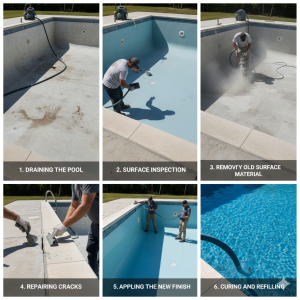
The resurfacing process is more detailed than most people expect. It’s not just “paint and done.” Real resurfacing is serious construction work. Typical resurfacing steps include:
1. Draining the Pool
Water is removed safely, usually using a pump system.
2. Surface Inspection
Professionals assess cracks, hollow spots, stains, and delamination.
3. Removing Old Surface Material
Grinding, chipping, or sandblasting removes damaged plaster and prepares the surface for bonding.
4. Repairing Cracks
This is where proper pool surface repair matters most.
5. Applying the New Finish
A plaster, pebble, or glass-bead coating is applied evenly.
6. Curing and Refilling
The surface cures, then it is refilled with balanced water. When done correctly, Swimming Pool Resurfacing adds years of life to a pool.
Choosing the Right Finish for Residential Pool Resurfacing
For homeowners, the best surface is the one that aligns with their lifestyle, budget, and maintenance habits. Good match examples:
- Busy families: pebblecrete (durable, long-lasting)
- Luxury outdoor design lovers: glass bead finish
- Budget-focused homeowners: plaster resurfacing
- Modern minimalist pool designs: light-coloured pebble or polished plaster
Residential pool resurfacing should always focus on safety, comfort, and long-term durability.
Cost of pool resurfacing NSW: Built for Heavy Use
A backyard pool is used seasonally, while a commercial pool gets hammered daily. Swimming pool resurfacing for hotels, gyms, schools, and public aquatic centres requires tougher surfaces and higher compliance standards.
Key needs in commercial pool resurfacing NSW projects include:
- Slip resistance compliance
- Strong chemical tolerance
- Easy-clean surface texture
- Fast project completion timelines
- Long-term durability under high foot traffic
For commercial pools, resurfacing is not just about looks. It’s about performance. For technical guidance on pool safety and compliance expectations, refer to the official NSW resource: NSW Health Swimming Pool and Spa Pool Safety.
How Long Does Swimming Pool Resurfacing Last?
This depends on the surface type and the quality of maintenance. General lifespan expectations:
- Plaster: 7–12 years
- Pebblecrete / aggregate: 12–20 years
- Glass bead finishes: 15–20 years
- Tiles: 20+ years (if grout maintained)
With proper care, resurfacing is a long-term investment.
Maintenance Tips After Pool Resurfacing NSW Projects
A resurfaced pool is like a freshly detailed car. It looks fantastic, but it needs care. Swimming pool resurfacing lasts longer when supported by simple maintenance habits, including:
- Keep pH levels balanced consistently
- Brush walls regularly during early curing weeks
- Avoid harsh chemical dumping
- Maintain stable chlorine levels
- Clean filters regularly
- Schedule professional inspections yearly
This is the easiest way to protect the cost of pool resurfacing that NSW homeowners invest in.
Swimming Pool Resurfacing Trends in NSW Right Now
Pool finishes have evolved fast. NSW homeowners are leaning into modern, stylish looks. Top resurfacing trends include:
Natural Stone Colour Palettes
Soft greys, sandy beige, and deep ocean blues are dominating.
Lagoon-Style Pebble Surfaces
These finishes create that “holiday resort” vibe at home.
Minimalist Waterline Tiles
Thin tile strips in black or charcoal are popular in modern builds.
Textured Non-Slip Surfaces
Safety meets style, especially in family homes. A good resurfacing job makes the entire backyard feel upgraded.
Conclusion
A pool should feel inviting, not embarrassing. A worn-out surface doesn’t just ruin the look; it affects comfort, safety, and long-term maintenance costs.
Swimming Pool Resurfacing is one of the most valuable property upgrades available in NSW because it restores beauty, strengthens durability, and makes the pool feel brand new again. Whether it’s a small backyard setup or a busy public pool, a fresh resurfacing job completely changes the look and adds years of life to the structure.
A premium pool surface can completely transform a property’s feel. For anyone considering swimming pool renovation or planning a long-term pool surface repair, now is the right time to act. Contact Us Today to bring back the clean, modern, resort-level look that every NSW pool deserves.
Frequently Asked Questions
1. How often is Swimming Pool Resurfacing needed in NSW?
Most pools need a facelift every 7 to 20 years. Basic plaster gives up the ghost pretty quickly, but pebble and glass finishes can go the distance if you keep the water balanced.
2. What is the cost of pool resurfacing NSW homeowners should budget for?
You’re looking at anywhere from $6,000 to $25,000 for a resurface in NSW. The final bill depends on the size of the job and whether you go for basic plaster or high-end glass beads.
3. Is pool resurfacing in NSW better than a complete swimming pool renovation?
Resurfacing is a way cheaper and faster win than a full-blown renovation. It fixes the looks and the feel without messing with the actual structure, which is perfect for most tired pools.
4. Does pool surface repair fix leaks permanently?
You can usually patch up small cracks and surface chips, but if you’re dealing with major structural leaks, a surface fix is just a band-aid for a much bigger problem. Doing a proper walkthrough before you start is the only way to catch hidden problems and stop them from coming back to haunt you later.
5. What is the best finish for residential pool resurfacing?
Most homeowners go for pebble Crete or glass beads these days. They look amazing, handle a beating, and don’t soak up stains as the old-fashioned plaster finishes do.
6. What makes commercial pool resurfacing in NSW different from residential projects?
For commercial jobs, it’s all about grit, durability, and handling constant chemicals. These pools need a much tougher finish that meets safety codes and can survive heavy daily use.